
I usually recommend that students meet with me after receiving a provisionally-graded draft of their paper. Whether students take up my invitation to meet is entirely up to them; some do and some don’t. For those who do accept my invitation, we start by discussing the philosophical shortcomings of their paper. Then we talk about whether or not the student should seek further assistance with the organizational and mechanical aspects of their writing. These sessions typically take 10-30 minutes.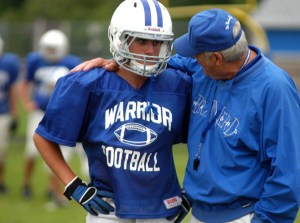
Sometimes students rewrite their papers based on these discussions, only to be disappointed when their grades on their latest drafts are not greatly improved. They come back to my office to ask what went wrong. These are difficult meetings, and oftentimes frustrating for both me and the students.
I try to explain that while I can give my best advice on how to improve a paper, there is no way for me to tell for sure that a student is listening attentively to my advice and internalizing it in a coherent way so they can actually do the work necessary to make the paper significantly better.
Students who record me or take notes during these meetings are more likely to do well, but even this is not a guarantee. At the end of a paper conference, a student will often ask me, “So, my next grade should be better?” My response is always, “Yes, so long as you execute!” To use an analogy: I could be the best football coach in the world, but unless my players execute on the field they’re going to lose the game.
Execution is the key.
© D. R. Koukal
 D. R. Koukal